Wednesday, 2 November 2011

Constructive Improvisation


"Your Brain on Improv" by Charles Limb gives a fascinating insight into the brain and improvisation.


There’s two main areas of scientific research into creativity. Cognitive Psychology and NeuroScience. Both have made attempts at understanding where creativity comes from and where in our heads it is located.

Updates in scanning technology are allowing new information to be found. the use of fRMI scans in particular is giving an insight into what’s happening in our brain during the creative process. The fMRI works by basically photographing the blood flow in the brain. Where a surge of blood flow appears during an activity there is a correlation to the about of activity that part of the brain is doing.

Charles Limb is a Head and Neck Surgeon. Earlier this year he conducted research into creativity with Jazz musicians using fMRI.

He got some of the best Jazz musicians in America to lie inside an MRI scanner with a modified MIDI keyboard on their laps. the participants memorized a piece of pre-written music and played it. Limb took scans of their brain while they were playing. Then he asked them to play the same piece but at certain points to improvise.

Limb discovered that during these points of improvisation self-monitoring went down and self-expression went up. Interestingly the part of the active part of the brain was the same part which connects to auto-biographical information. Limb replicated this experiment with the participation of freestyle rappers. the artist would rap to a pre-written lyrics and then at a specific moment interject with freestyle lyrics. the scan results shown an infusion of blood to the same area of the brain as the Jazz musicians. So there’s a belief that there is a neurological basis for creative.
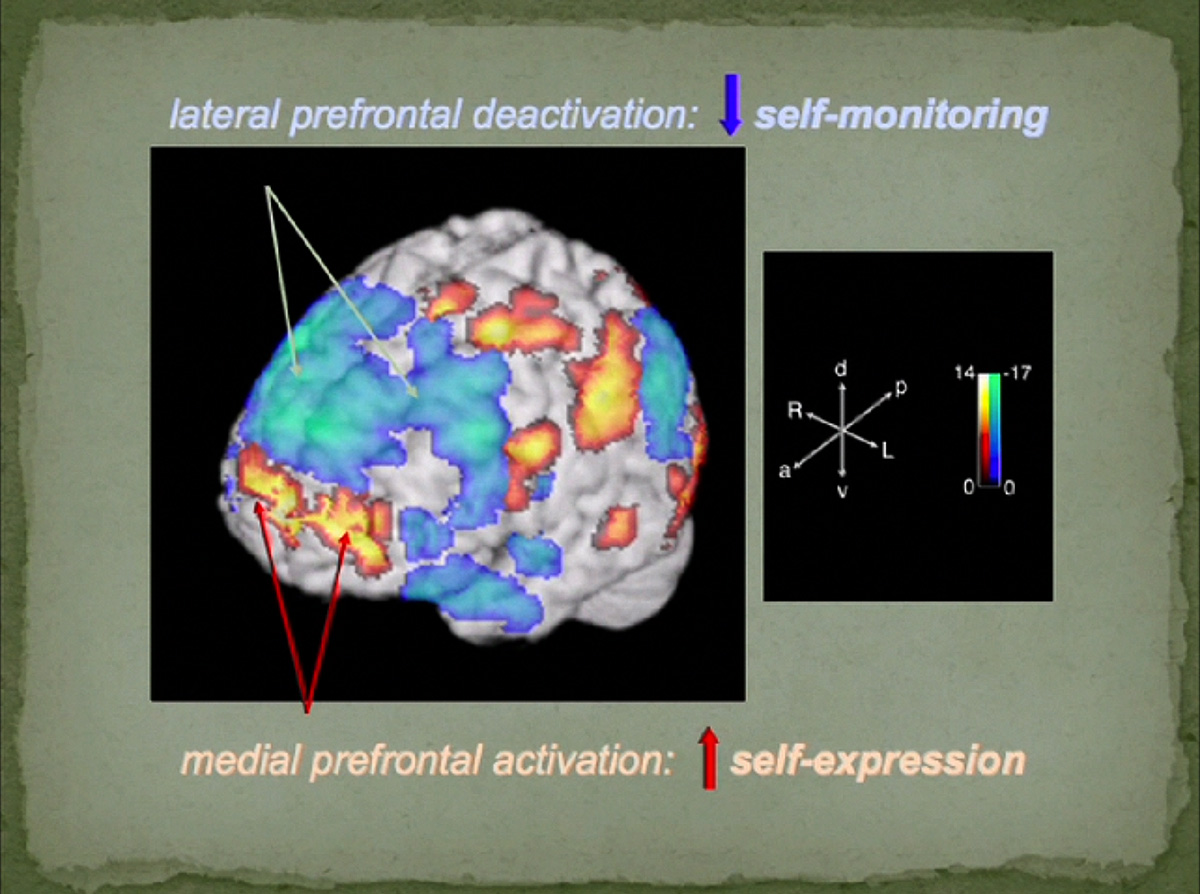

What I want to connect here is the idea that production artists use different creative methodologies to produce a constructive improvisation which essentially tricks their brain into shutting down these self-monitoring, more analytical, portions of the brain and open up the self-expressive creative parts of the brain.

Monday, 31 October 2011

Are Facts Aesthetic


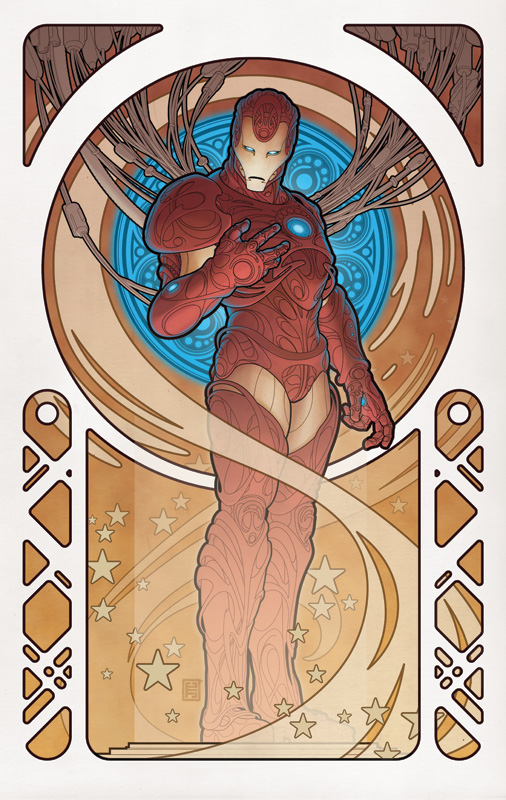
Ironman: Art Nouveau Aesthetic
http://johntylerchristopher.deviantart.com
 I recently had the opportunity to provide a written response to the question “Are Facts Aesthetic?”. My basic premise is facts are presented within a certain framework and language. If any information is presented in this format that can be construed as facts. I relate this idea of frameworks and language to art aesthetics in art movements. Say for example Art Nouveau. Work can be said to belong to the Art Nouveau movement by it’s form, fitting into a certain set of parameters, which match or mimic other forms and therefore they belong to the group we call Art Nouveau. Modernism, Surrealism, Dadaism, Cubism all have their own frameworks to be adhered to in order that work can be classified as one of them.
This I argue is the same for facts.
Read more if you’re interested. Are Facts Aesthetic Essay? (PDF)
- matt

Sunday, 30 October 2011

The Wonder of Art


 Noel Paul Stookey sang “Now a scientist may tell you how night turns into day, but it can never take the wonder away”
(Miracles, Real to Reel)
It never ceases to amaze me that with all the explanations of how our brains work, and the chemical reactions that happen inside us that explain why we react or think the way we do, that art can cut through the ‘scientific self’ and surprise us. We still get that “wow” factor when we see, hear, feel, experience “art”. Science can explain so much of “us” but it cannot take the wonder away.
- matt

Saturday, 22 October 2011

Restraint

Restraints would seemly go against the idea of creativity giving you freedom. Art, creativity, design, call it what you will is about freeing the soul of restriction. Often our understanding of creativity is tied up with freedom. Being unfettered to pursue a conceptual idea in anyway we please. How often do limitless options become oppressive to the creative? Building up the expectation of creativity "coming upon us" like a divine muse, waiting for inspiration before the first mark, word or shot is made.
– matt

Thursday, 15 September 2011

4 hours of Facing a Blank Wall


Tony Orrico, unison symmetry standing
I came across this wonderful artist and performer Tony Orrico. He lays out large strips of paper, lies down and restricts himself to certain movements. Using graphite pencil over 4 hours creates Massive human spirograph. Or He stands against the wall for 12 hours and restricts his movement to only his arm length. Check it out here: www.tonyorrico.com/PENWALD_DRAWINGS.html
Over the course of this semester I have wanted to investigate creativity under constraint. For in that constraint is where creative decisions are made which produce unexpected but inspirational results. Placing oneself in that position of restriction with the tools at hand (process) turns us (to use a sailing metaphor) toward the wind of resistance and faces us into the storm where we ultimately face off against ourselves to hopefully come out the other side victorious in our efforts to create original work. Tony Orrico is a perfect example.
-matt